


Nebula
Standard
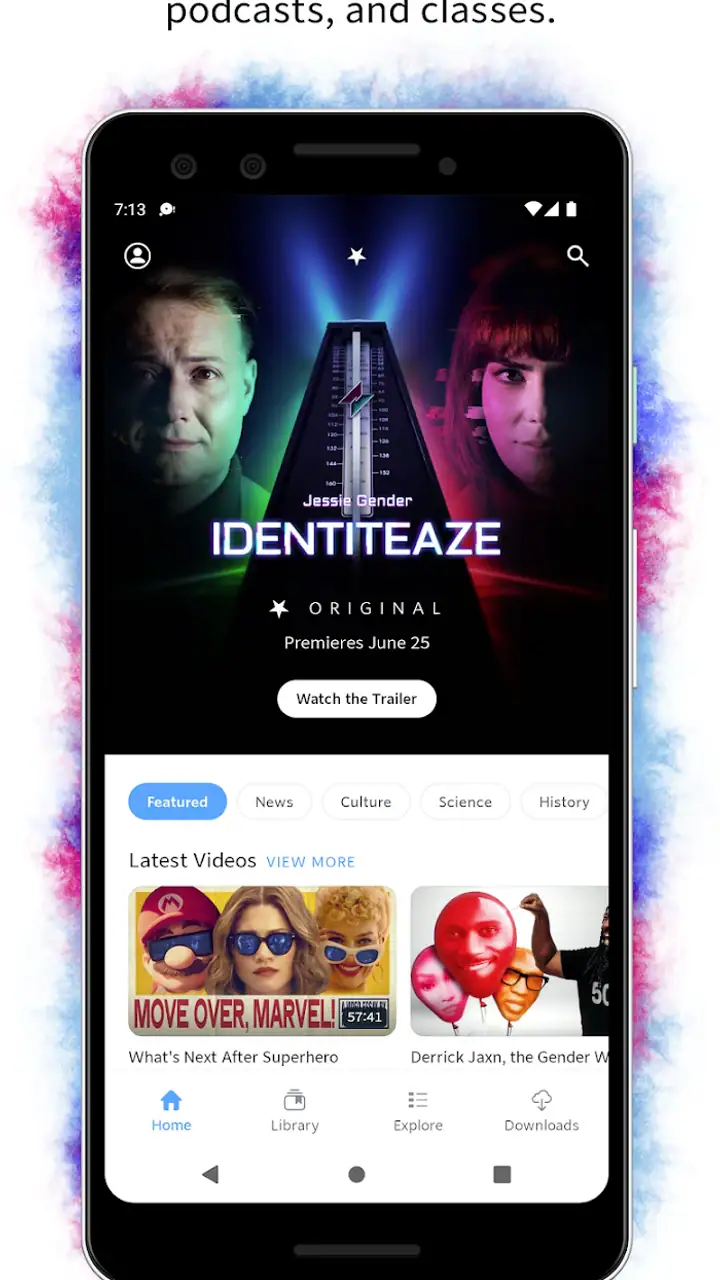
I approached Nebula as an entertainment app for people who want more than a quick stream of disposable clips. Its focus is a mix of videos, podcasts, and classes made by creators who retain ownership of their work, which gives the service a noticeably more curated feel than a general-purpose video platform. My first impression was that it asks me to choose what I want to watch rather than endlessly react to whatever an algorithm places in front of me.
That difference matters after the initial novelty wears off. A new app can be interesting for a few evenings simply because its library feels unfamiliar. The harder question is whether it becomes part of a normal week: something I open when I have a spare half-hour, a reliable show to return to, or a class that earns a place in my routine. In my experience, Nebula has a real chance of doing that, but mainly for viewers who enjoy thoughtful creator-led work and are willing to browse with some intention.
What the first week feels like
The opening appeal comes from the variety within a focused environment. Videos suit a short break, podcasts work while walking or doing chores, and classes are better for a deliberate session when I want to learn. Having those formats together makes the app feel less like a single-purpose player and more like a small entertainment and learning shelf that I can revisit throughout the day.
I found the strongest early use case was switching formats according to my available attention. A video can fill a quiet lunch, a podcast can accompany a commute, and a class can take over an evening when I want something more structured. That sounds simple, but it is a useful distinction from opening a broad video service and spending the first several minutes deciding what might be worth watching.
The creator-owned approach also changes how I judge the library. I am not only looking for the loudest thumbnail or the most familiar name. I pay more attention to whether a creator has a clear point of view, whether a series feels intentional, and whether the subject is worth following beyond one episode. For viewers tired of generic recommendations, that narrower identity can make the first week feel refreshingly personal.
Related News

Why WhatsApp Messenger Still Makes Everyday Communication Feel Easy

Jurassic World: The Game Is the Better Dino Tycoon for Strategic Players

Threads in Real Life: Who Should Join, Lurk, or Leave

How SHEIN Turned Shopping Into an Endless Content Feed

How to Make Fortnite Feel Smarter on Mobile

Should You Switch to Microsoft Outlook on Mobile?
At the same time, Nebula is not automatically ideal for someone who wants every entertainment option in one place. A general video platform is usually better for breaking news, mainstream releases, quick tutorials, music videos, and the enormous range of casual material people search for every day. Nebula makes more sense when I want creator-led programming with a stronger sense of selection, not when I need a universal answer to every viewing request.
The app is free to install, which makes trying it straightforward, while some content or access may involve in-app purchases ranging from under a dollar to around sixty dollars per item. I would therefore explore the available material before treating it as a regular destination. The free entry lowers the risk of testing the experience, but the value question depends on how much of the catalog matches my interests and how often I expect to return.
Its Teen content rating is another practical point for households. I would not treat the app as automatically suitable for younger children simply because it contains classes or educational-looking material. Parents should still make their own decision about whether the available creator content fits the age and maturity of the person using it.
Gallery
Finding a personal routine instead of browsing forever
My best advice for the first week is to avoid judging the service after one random session. I would sample each main format, save or remember the creators that genuinely hold my attention, and then return to those choices on separate days. This reveals whether the app has depth for me or whether its appeal depends on the excitement of discovering something new.
A useful test is to create three informal lanes in your mind: something short for a break, something audio-friendly for movement, and something substantial for focused time. Nebula becomes more convenient when I know which kind of session I am starting. Without that small habit, the mixture of videos, podcasts, and classes can make the app feel like a catalog I browse rather than a service I use.
I also would not assume that the most polished presentation guarantees the best long-term match. A creator may be excellent in one format and less compelling in another. The practical question is whether at least a few creators can support repeated viewing, not whether the entire catalog impresses me on day one.
Does it earn a place month after month?
The lasting value depends on repeatable discovery. If I find a creator whose work fits my taste, the service can become a dependable part of my week. The combination of ongoing videos, podcasts, and classes gives me several reasons to return, especially when I want a break from the broad, noisy recommendation systems found elsewhere.
That recurring value is strongest for people who already follow independent educators, commentators, filmmakers, or other online creators. Nebula can gather that kind of work into a more focused environment, making it easier to move from a single interesting piece to a wider body of material. I like that progression because it rewards curiosity rather than only immediate clicks.
For a realistic everyday scenario, imagine a weekday with three small windows of time. I might watch a video while eating lunch, listen to a podcast while preparing dinner, and use part of the weekend for a class. The app does not need to dominate my free time to be useful; it only needs to offer a good choice whenever one of those windows appears. That flexibility is more convincing to me than the promise of an enormous library.
The trade-off is that regular value can feel uneven. A class may be useful once but not something I revisit. A podcast may suit a particular mood but not become a weekly habit. A video series may be excellent yet release material at a pace that leaves gaps. Nebula works best when I treat it as a rotating collection of creator work rather than expecting a constant stream of must-watch entertainment.
Compared with a podcast-only app, it is broader because audio is only one part of the experience. Compared with a class platform, it is more relaxed and entertainment-oriented, but it may not provide the same sense of a formal course path. Compared with a general video service, it feels more deliberate and creator-centered, while offering less breadth for random searches. Those differences make the choice fairly clear: I would pick Nebula for focused creator programming, not for maximum variety or a tightly managed curriculum.
Who is most likely to keep using it?
I think it is a strong fit for viewers who enjoy learning through personality and presentation rather than through a rigid textbook structure. It also suits people who like moving between visual and audio formats without maintaining several separate entertainment apps. If you already have creators whose work you trust, the service has a natural starting point instead of asking you to build interest from nothing.
I would be more cautious if your main goal is live coverage, mainstream television, children’s programming, fast answers, or a huge collection of short clips. I would also skip it if you rarely watch creator-led material and prefer a service organized around familiar studios, major releases, or a formal sequence of lessons. The app’s identity is specific enough that the wrong audience may experience its focus as limitation.
Another important question is whether you need offline access, cross-device continuity, or particular playback tools in your daily routine. I would test the app in the situations where I normally consume media before committing emotionally to it. A service can have appealing content and still be inconvenient if it does not fit the way I watch, listen, or study.
How much maintenance does the habit require?
Nebula is relatively easy to maintain when I keep my expectations modest. I do not need to monitor every new release or finish every class. A simple routine works better: check in when I have a suitable time window, continue one series when it deserves attention, and let the rest of the catalog remain optional. This prevents the app from becoming another queue that feels like unpaid administrative work.
The main maintenance burden is choosing. A mixed catalog creates more possibilities, but it also creates more decisions. If I open the app without knowing whether I want a video, podcast, or class, I can spend energy browsing instead of enjoying anything. My workaround is to decide the format before opening it. That small step reduces the feeling that the service is asking me to plan my entire evening.
I would also review my spending carefully because the in-app purchase range is wide. A low-cost item can feel harmless, while several separate purchases may change the economics of using the service. I prefer to decide in advance what kind of value I am buying: a one-time class, access to a creator’s work, or something I expect to revisit. That makes the purchase feel deliberate rather than a reaction to a persuasive thumbnail.
Because the developer is Standard and the app has been available since late February of 2020, it has had time to establish an identity beyond a brand-new experiment. Its current audience is substantial, with more than five hundred thousand installs, around four thousand ratings, and roughly one thousand written reviews. I read those figures as evidence of meaningful interest, but not as a guarantee that every viewer will find a lasting fit.
The average rating sits at three and a half, which matches my balanced impression: the concept is appealing, yet the experience will depend heavily on personal taste, content expectations, and tolerance for browsing. I would not use the rating alone to decide. I would use the free entry to test whether the available creators can support a real weekly habit.
Small habits that improve the experience
One practical approach is to separate discovery from consumption. When I have plenty of time, I can look for new creators. When I only have a short break, I should return to something already chosen. Mixing those two activities is what makes many media apps feel tiring, because every session becomes a search session.
Another useful habit is to evaluate classes by reusability rather than by length or presentation. If I can imagine returning to a lesson, applying an idea, or using it as a reference later, it has more lasting value than a class I merely enjoy once. This is where Nebula can compete with more formal learning products: not by replacing them, but by making learning feel closer to the creator content I already choose for entertainment.
For podcasts, I would judge whether the format works with my actual routine. Audio is valuable only when I have a reliable listening situation, such as walking, commuting, cooking, or tidying. If most of my free time is visual and stationary, the podcast portion may add less value than it does for someone who spends hours away from a screen.
Where fatigue starts to appear
The first source of fatigue is the gap between discovery and commitment. A creator-led catalog can feel fresh because it offers a different tone from mainstream services, but freshness alone does not create a habit. After several sessions, I need dependable reasons to return. If I have already sampled the subjects that interest me and nothing becomes a regular favorite, the app may gradually slide into the “occasionally browse” category.
The second issue is format overlap. Videos, podcasts, and classes are useful together, but they can also compete for attention. I may open the app intending to learn and end up watching something easier. On another day, I may want a relaxed podcast but feel tempted to browse visual content. The app gives me flexibility, yet that flexibility requires self-direction.
There is also a potential value mismatch for people who consume media in large quantities. Someone who watches several hours every day may quickly compare Nebula with services that offer a much larger range of genres and formats. In that situation, Nebula may work better as a complement than as a complete replacement. I would keep it for distinctive creator work while using another service for broad entertainment needs.
Paid content can introduce a different kind of friction. The ability to purchase individual items may be convenient when I want one specific experience, but it can make the catalog feel less simple than a single all-you-can-use subscription. Before buying, I would ask whether I expect to return to the material and whether the same money would be better spent on a service that matches my broader habits.
The Teen rating may also limit its role as a shared family entertainment app. I would be comfortable recommending it to an interested teenager or adult after considering the specific content, but I would not present it as a hands-off children’s library. That distinction matters if the main reason for installing it is family use.
When another option is better
I would choose a general video platform when I need the widest possible catalog or when I am searching for something highly specific outside Nebula’s creator-focused identity. I would choose a dedicated podcast app when audio organization, podcast discovery, and listening controls are my central priorities. I would choose a formal learning platform when I need a clearly sequenced curriculum, measurable progress, or a credential-oriented experience.
Nebula is the better choice when I want the middle ground: creator-led entertainment that can also teach me something, with enough format variety to fit different parts of the day. Its advantage is not that it wins every comparison. Its advantage is that it combines a particular kind of voice, subject matter, and viewing culture in one place.
I would also avoid making it my only app if I dislike curated ecosystems. Some viewers prefer a completely open search box and are happy to sort through a huge amount of material. Nebula’s focused personality can feel helpful to me, but another person may experience that same focus as a boundary around what is available.
My long-term verdict
After the first-week curiosity fades, Nebula earns lasting space only when I find a small group of creators or classes that I genuinely want to revisit. Its strongest quality is not endless novelty; it is the possibility of building a more intentional media routine around videos, podcasts, and learning. That makes it more durable than an app I open only to fill silence, provided my interests line up with its creator-centered approach.
I appreciate that it can serve different moments without feeling entirely scattered. A short video, an audio session, and a class can each have a place in my week. The service also encourages me to follow ideas and creators rather than simply chase the next recommendation. For me, that is a meaningful difference from broad entertainment apps that are excellent at holding attention but less reliable at helping me decide what deserves it.
Still, I would not recommend installing it on the assumption that a varied catalog automatically creates a routine. I would try the free experience, test it during a normal week, and pay attention to whether I return without forcing myself. I would be especially careful with individual purchases, making sure they support a repeatable interest rather than a momentary impulse.
My recommendation is simple: try Nebula if creator-led videos, podcasts, and classes already sound like the kind of media you seek. It is less convincing for people who want mainstream breadth, formal education tools, or completely effortless browsing. With the right expectations, I see it as a focused companion that can survive beyond its novelty. Without a few dependable favorites, it is likely to become another app I remember fondly but rarely open.
FAQs for Nebula
What is Nebula, and what can I watch on the app?
Nebula is a subscription-based streaming platform focused mainly on creator-led educational and entertainment content. Its library includes documentaries, video essays, podcasts, courses, and original series covering topics such as science, technology, culture, history, and filmmaking. The catalog is designed for viewers who prefer thoughtful, independent productions rather than traditional television programming or mainstream streaming releases.
Is Nebula free to download and use?
The Nebula app can generally be downloaded for free on supported Android and iOS devices, but most of its content requires a paid subscription. Availability, pricing, and subscription options may vary by country and by the platform used to subscribe. Some promotions or bundled offers may provide access through another service, so it is worth checking the current terms before completing registration.
Does Nebula support offline viewing?
Nebula supports offline downloads for eligible content on compatible mobile devices, which is useful when traveling or when you have limited internet access. After downloading a video, you can watch it without an active connection, although access may be subject to subscription status, licensing restrictions, and application rules. Downloaded content also uses device storage, so managing saved videos may be necessary.
Can I watch Nebula on multiple devices?
You can use a Nebula account across supported devices, including compatible smartphones, tablets, web browsers, and selected television or streaming platforms. The exact experience depends on your operating system and regional availability. Before subscribing, users who plan to watch on a smart TV or other large screen should confirm that their preferred device is supported and review any limits on simultaneous streaming.
Is Nebula worth subscribing to?
Nebula can be worthwhile for viewers who regularly watch independent creators and want access to thoughtful, ad-free programming in areas such as education, technology, culture, and commentary. It may be less appealing if you mainly want blockbuster films, major television series, or a large general entertainment catalog. The value depends on how often you watch its exclusive content and whether the available creators match your interests.
Pros
- Thought-provoking content from independent creators and experts.
- Strong focus on science
- culture
- and educational topics.
- Well-produced videos with clear explanations and storytelling.
- Supports creators outside traditional media platforms.
- Useful for viewers seeking alternatives to mainstream entertainment.
Cons
- Much of the catalog requires a paid subscription.
- Topic selection may feel too niche for casual viewers.
- Some videos are longer than necessary for quick viewing.
- Content availability can vary by region and licensing.
- The app may offer fewer mainstream titles than larger services.


